Start with the back-office tasks that repeat every week and follow clear rules: approvals over a limit, moving data between systems, reading supplier documents. Build them on proven rules and workflows, add AI only where the input is messy, and keep the judgment calls with your people.
Every few months there's a new shiny thing in AI. Right now it's agents: software that decides its own next step.
Agents are real. But in June 2025, Gartner forecast that over 40% of agentic AI projects will be cancelled by the end of 2027, because of rising costs, unclear value or weak risk controls. That's a forecast, not a measurement. It still says something.
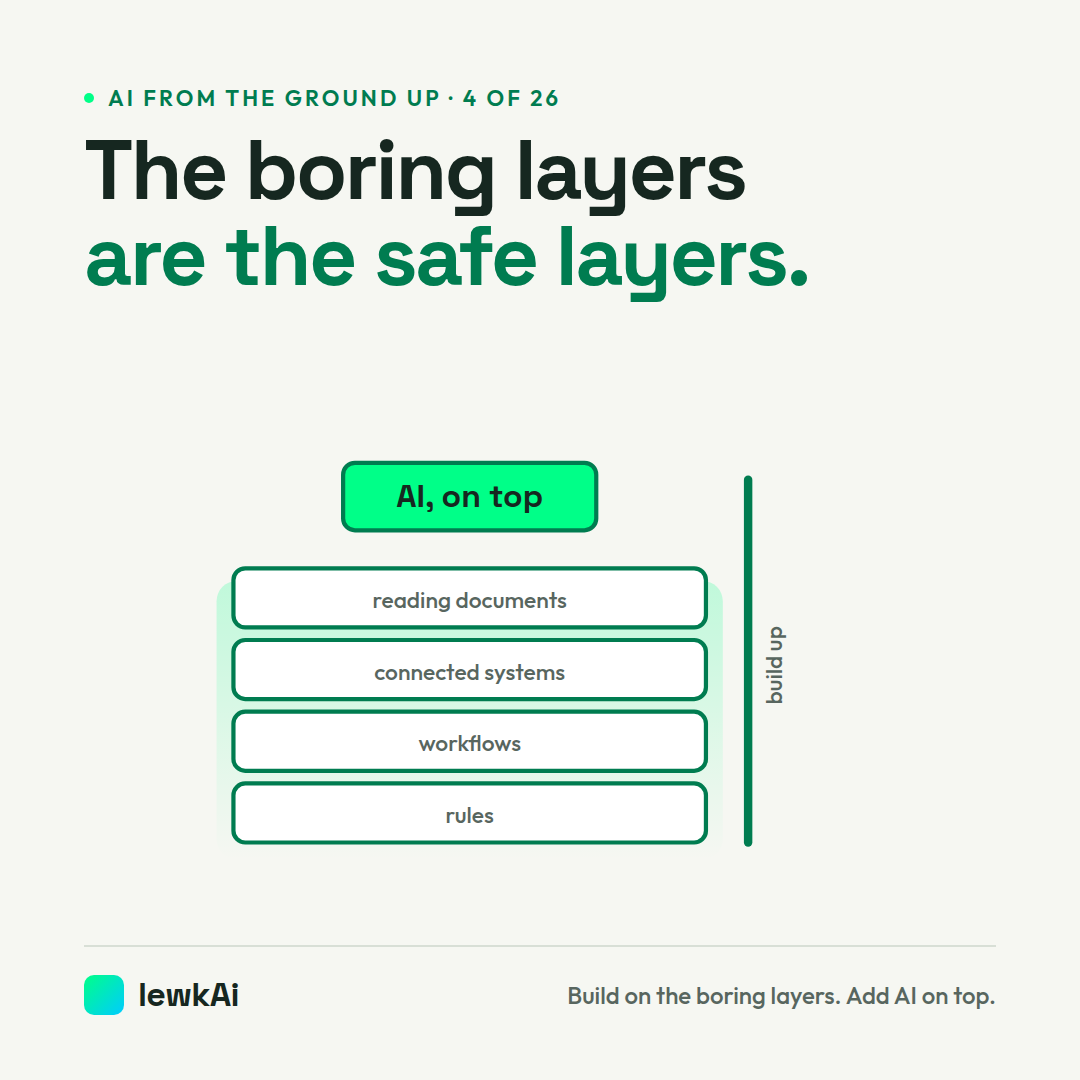
Underneath the hype sit the boring layers:
- Rules: “if the invoice is over this amount, a manager signs.”
- Workflows: the same steps, in the same order, every time.
- Connections between the systems you already have, so nobody retypes.
- Reading documents: pulling the numbers off a supplier statement.
They're not exciting. They're also proven, cheap to check, and easy to fix when something goes wrong.
Even the AI labs say so. Anthropic, which makes Claude, advises “finding the simplest solution possible, and only increasing complexity when needed.”
So for back-office work, build on the boring layers first. Add AI where the input is messy, like the same request written five different ways. Check its output with fixed rules. Send the unclear cases to a person.
The tasks that go first are the ones that repeat every week and follow clear rules. Your people stay, and keep the judgment calls.
Hand the repetitive work to AI, so your team can focus on what moves the business.
What's the most boring task in your back office that happens every single week?
Sources: Gartner press release, 25 June 2025, “Gartner Predicts Over 40% of Agentic AI Projects Will Be Canceled by End of 2027”, reasons: escalating costs, unclear business value, inadequate risk controls; a forecast, not a measurement. Anthropic, “Building effective agents”, 19 December 2024. “The same request written five different ways” is a generic example, not a client.