To automate supplier invoice checks without losing control, first write down how the work really runs: the hidden steps and unwritten rules, not just the written procedure. Then let plain rules handle the routine matching, use AI only where it genuinely helps, and keep a named person on every approval that matters.
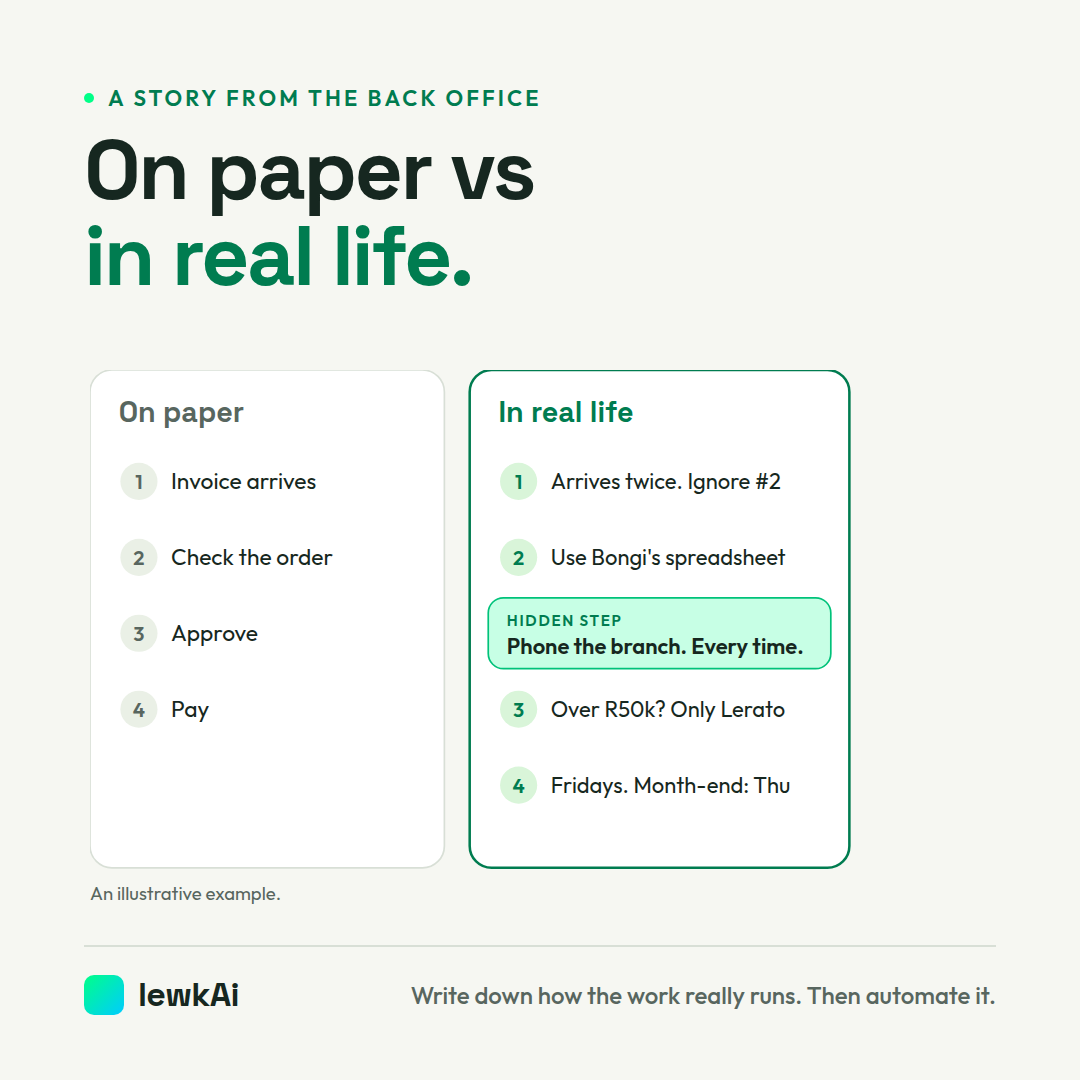
On paper, paying a supplier takes four steps.
In real life, it takes five steps and four rules nobody wrote down.
The written version:
Invoice arrives. Check it against the order. Approve. Pay.
The real version adds a step that's in no procedure:
Phone the branch to confirm the delivery. Every time.
And rules that live only in people's heads:
- The supplier sends every invoice twice. Ignore the second one.
- Check Bongi's spreadsheet, not the system. “The system is wrong.”
- Anything over R50k waits for Lerato. If she's on leave, it waits.
- We pay on Fridays. At month-end, Thursday.
(An illustrative example. If you run a back office, it probably still sounds familiar.)
Now give the written version to an AI tool.
It will follow the four steps perfectly and still get the job wrong.
That's why so many AI tools change nothing.
The tool isn't the problem. The missing context, data and decision rights are.
So we start by writing down how the work really runs: the hidden steps, the unwritten rules, who really signs off.
Then we automate the routine parts.
The judgment stays with your people.
See the full worked example: paying a supplier invoice, on paper and in real life, and how one invoice gets decided, step by step.
What's one rule in your business that isn't written down anywhere?
An illustrative example. Bongi, Lerato and the approval limit show the kind of unwritten rules we map. The full example is on lewkai.com/examples/supplier-invoice.