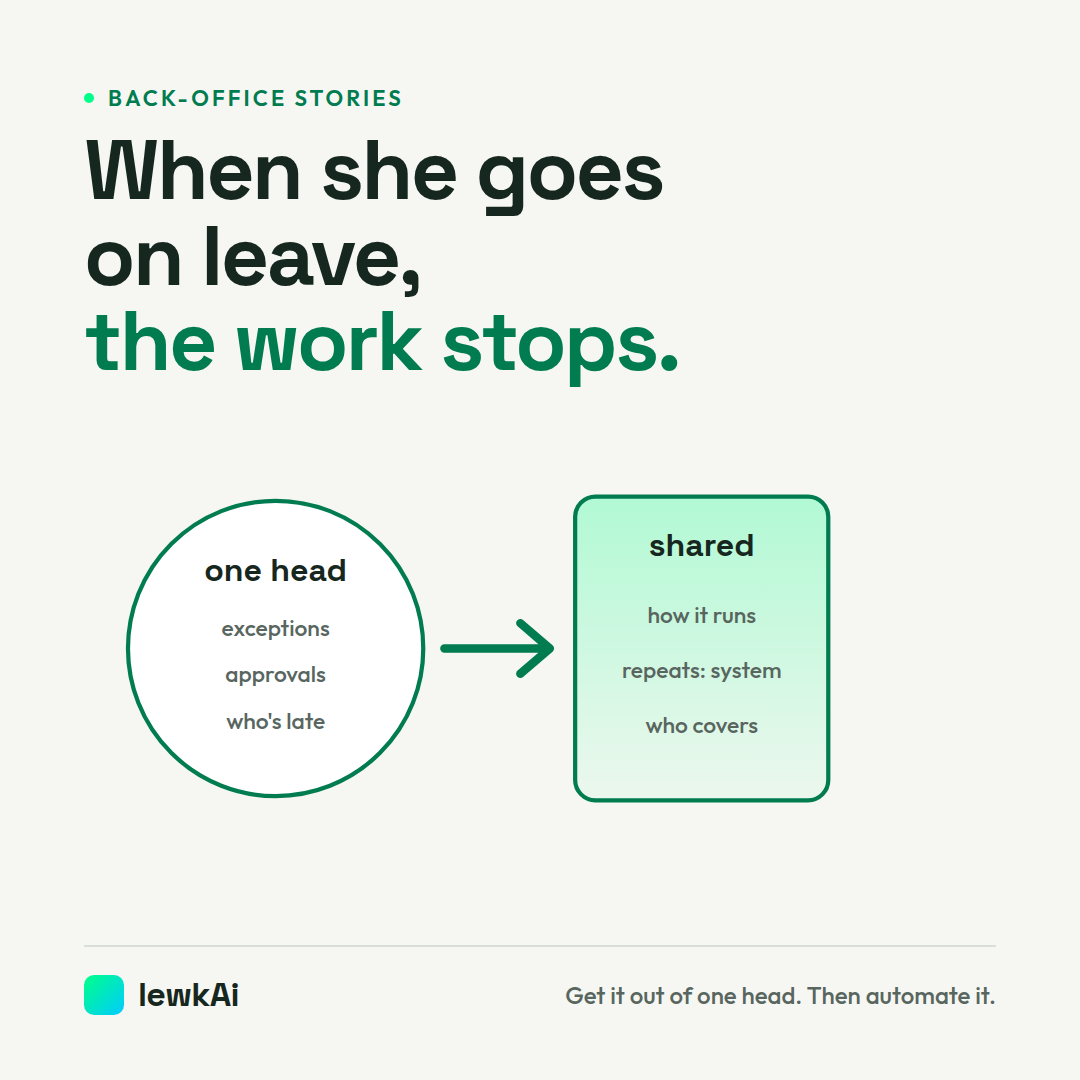
To stop a process grinding to a halt when a key employee is on leave or resigns, get the work out of one person's head: write down how it really runs, with them, including the exceptions. Then hand the repeat steps to a system and agree who covers the judgment calls, so the work carries on and nobody is replaced.
When she goes on leave, the work stops.
Every business has one person like this. Let's call her Thandi. (She's an illustrative example, not a client. You'll still recognise her.)
Thandi answers the payroll queries. She chases the supplier statements. She knows which store manager always sends the timesheets late, and which approvals can wait.
None of it is written down. It lives in her head.
Then she takes two weeks off in December.
- Day 2: nobody can find the right template.
- Day 4: approvals sit in a WhatsApp group nobody checks.
- Day 6: someone phones Thandi on the beach.
That's not a Thandi problem. She's brilliant. It's a “this process only exists in one head” problem. And it's the same problem when someone resigns, only longer.
The fix isn't another hire to shadow her. It's three steps:
- Write down how the work really runs, with Thandi, including the exceptions nobody wrote down.
- Hand the repeat steps to a system: collecting, checking, reminding, filing.
- Keep the judgment calls with people, and agree who covers them when she's away.
Thandi stays. She keeps the hard calls. And next December, she switches her phone off.
Hand the repetitive work to AI, so your team can focus on what moves the business.
Which task in your business stops when one person is away?
Source: no outside sources. Thandi and the day 2, 4 and 6 timeline are an illustrative example, not a client.